Beau Dick and Priscilla Dobler Dzuz : Two Artists Address Climate Catastrophe
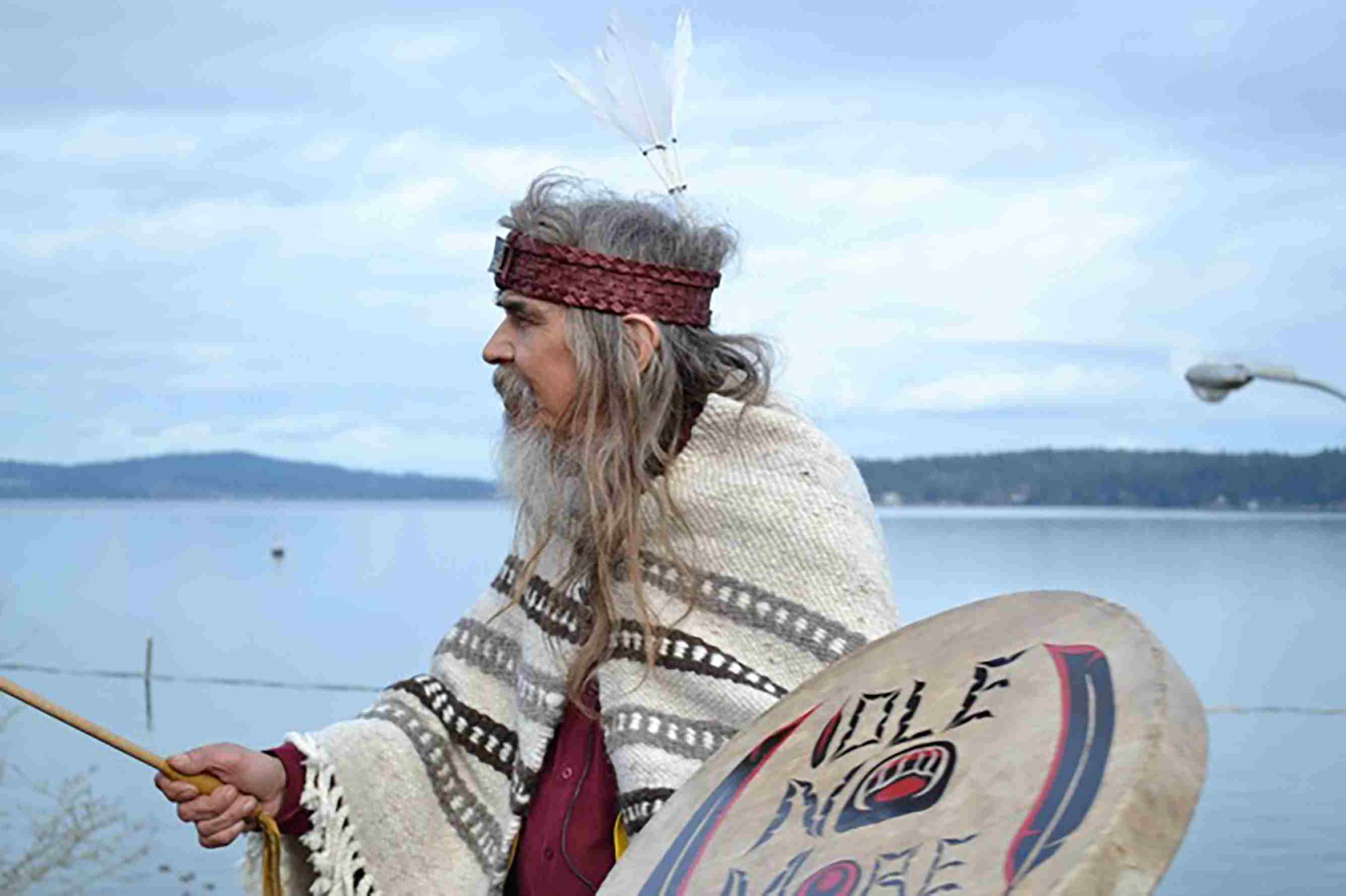 “Beau Dick : Insatiable Beings “ until January 18th Frye Art Museum 704 Terry Ave, Wed- Sun 11-5
When I first came into the Frye Art Museum and saw the mask by Beau Dick in the front gallery I was horrified and frightened. They seemed so aggressive and ugly. But by a stroke of good fortune I was able to see a long film about Beau Dick in the museum and it explained how his unique masks are created and animated with performances at gift giving potlatches at Alert Bay Canada.
As he performs he creates a magical atmosphere with the mask. Each mask has its own particular function and name and as you begin to get used to his incredible distortions and originality it becomes a fascinating exploration.
Beau Dick belonged to a secret society called Hamt’sa. To become part of this secret society the young man must become possessed by and purged from the spirit of Bax wbakwalanuksiwe’, a cannibalistic giant. In the end they are cured of the disease to consume everything. Beau Dick’s subtitle of his catalog is “devoured by consumerism.” suggesting that most of society is not yet cured.
Consumption of animals as well as the planet itself by humans is the driving force behind Beau Dick’s work. In 2012 he took 40 Atlakima masks from an exhibition of his work in Vancouver, brought them back to his home in Alert Bay and burned them as a strong statement to “short circuit the commodification of northwest coast ceremonial objects.” Valuable objects are traded not sold between the people of the Kwakwaka’wakw. By burning the masks the objects were returned to the ancestors. The Atlakima also known as the “Dance of the Forest Spirits” includes 40 different characters ranging from supernatural to human.
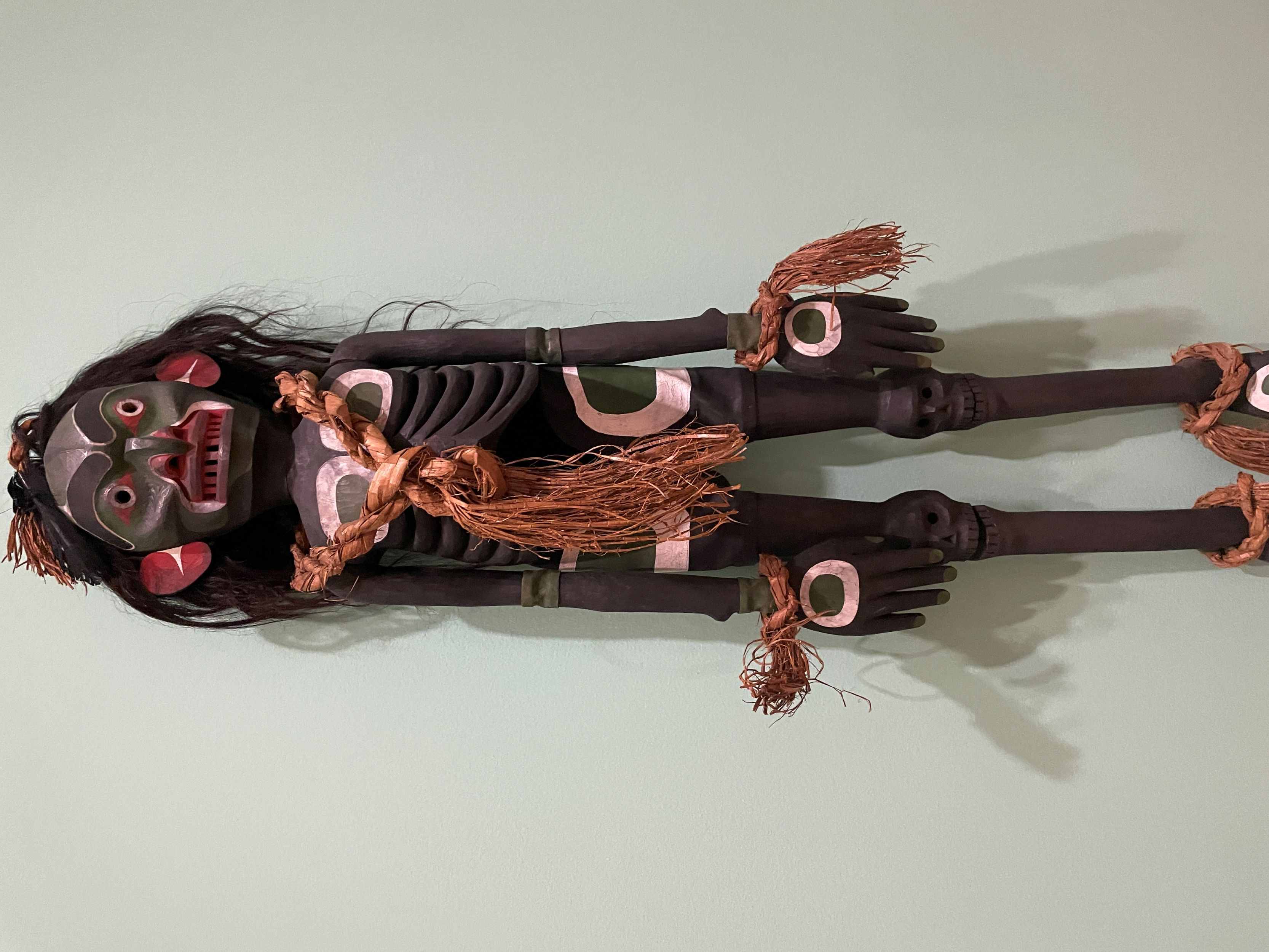
“Winalagalis The War Spirit Puppet” creates trouble wherever he goes. In the exhibition there were several examples of this disruptive spirit. Under the theme of Hamat’sa we saw Moogums four masks representing the “bird henchman” of the cannibalistic giant. Another group are the ghosts who seem to be taking care of the giant and they can resurrect people from the dead. Apparently there is also a reference to Dickens’ Christmas Carol ghosts! The layers of meaning and materials are complex and can only be touched on here.
A second exhibition by an indigenous artist features multimedia work by Priscilla Dobler Dzul. “Water carries the story of our stars.” (Ja’e’ ku bisik u k’ajláayil k Eek’/El agua lleva las historias de nuestras estrellas”) (until April 19).
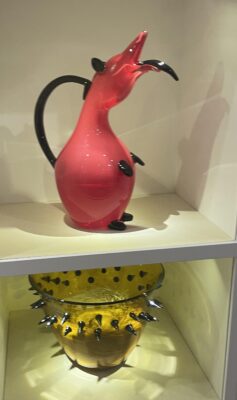
In niches in the wall outside the gallery blown glass vessels make reference to various specific animals and activities with the collective title:
“’When the three armadillos arrived with the water, the lords of the underworld brought the offerings and vessels removed their thorns to weave the threads together.”
All of these vessels have unique forms with precise titles such as “Turtle rabbit also known as armadillo has been called many names, knows many things that the water, land, and winds carry.”
The artist is a mix of Mayan and Mexican heritage as well as Scottish. She, like Beau Dick, is making reference to the critical situation on the planet, in her case with a focus on water.
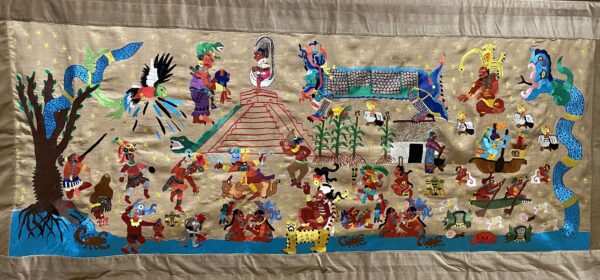
At the entrance to the gallery the artist has placed a large embroidery with the title “here is the beginning the lands of the Mayas.” Looking carefully we can see a myriad of traditional gods, headdresses, people dancing , animals running around and the river flowing at the bottom of the tapestry also filled with creatures.
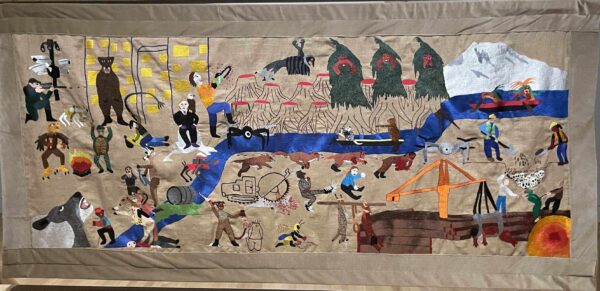
A second embroidery facing the other way is titled our “skies were once filled with stars.” It shows the deterioration of the environment. All is chaos, fear and conflict. A white man in the foreground stands on a pile of bones.
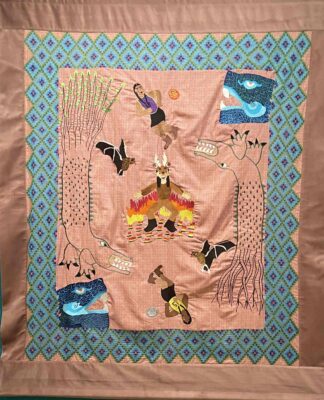
A smaller work made in collaboration with Doña Chela (Maria Graciela Cante Peraza) references that Kulkulcan descends from the skies.
We see a feathered serpent deity who descends from the sky and bridges earth and sky as a symbol of protection.
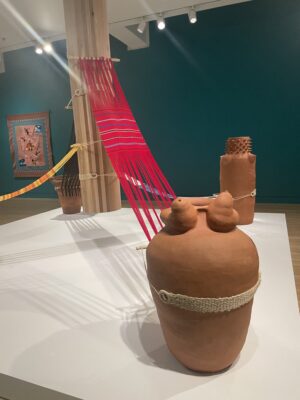 In the center of the exhibition an installation large ceramic vessels suggest women’s torsos. “The four winds gathered around Tree and her threads.” They contain whistles and are connected by backstrap weaving, a long tradition in Mayan culture, to a “tree” representing the Mayan tree of life.
In the last corner of the exhibition a video documents a performance that Priscilla created focusing on polluted water in the Yucatan and Tacoma (where she also lives). Near it are guardian figures in clay.
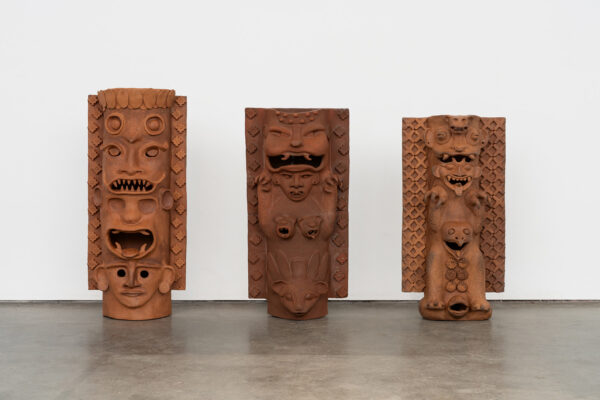
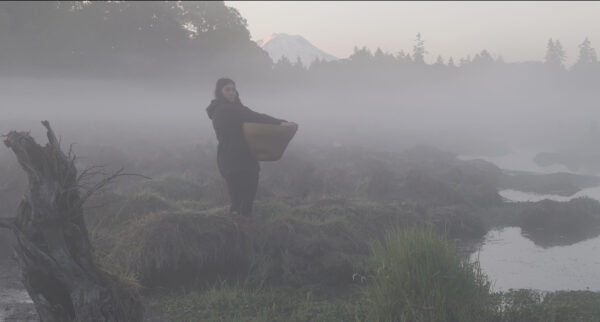
These two exhibitions are remarkable examples of contemporary indigenous artists that address environmental concerns in entirely different media. The Frye Art Museum shines as it gives us new ways to understand our contemporary crisis. We are indeed fortunate to have it in our neighborhood (and it is free!).
This entry was posted on January 22, 2026 and is filed under Uncategorized.