Rising Voices Contemporary Art from Asia, Australia, and the Pacific
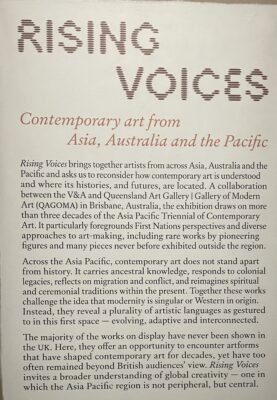
According to the Victoria
and Albert Museum these
artworks give us a different perspective on contemporary Asiam art. Indeed I felt as I looked at them that they were entirely different from Asian Contemporary art that I have seen previously. The artists draw on
recent political events, mixing them with age old mythmaking, contemporary materials and tradtitional practices. 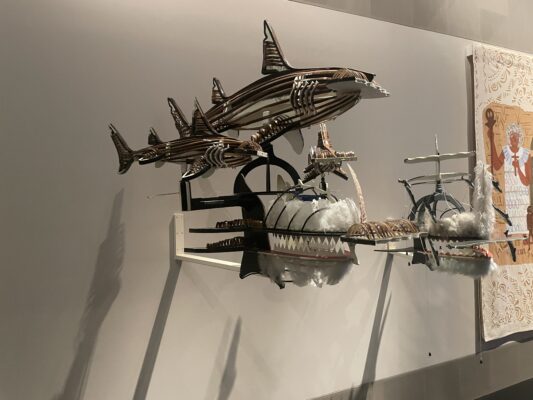
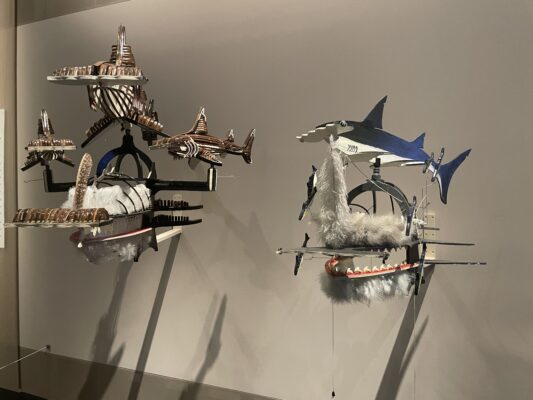
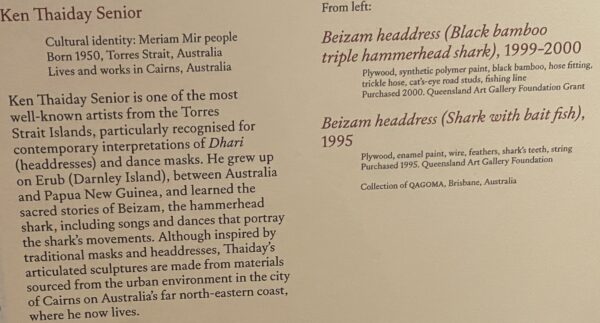
Such as these pieces by Ken Thaiday senior, they combine the idea of a headdress with a black bamboo hamerhead shark. The second piece shark with bait fish is also an elaborate headdress.
 Hi
Hi
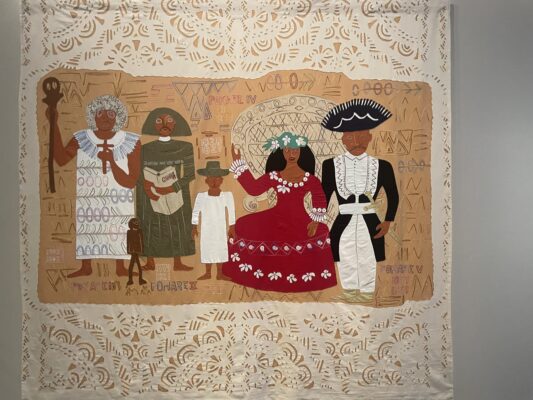
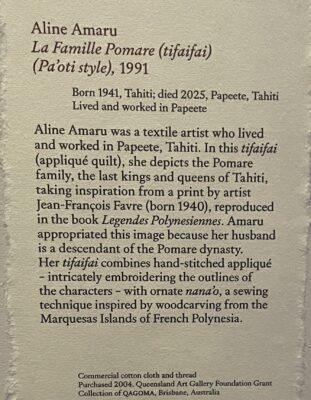
Amura gives us the llast royal family of Tahiti. It combines hand stiched applique and nama”o a sewing technique inspired by woodworking, and taken from French Polynesia.bThis type of media experimentation is truly extraordinary, resulting in the blending of various sources. 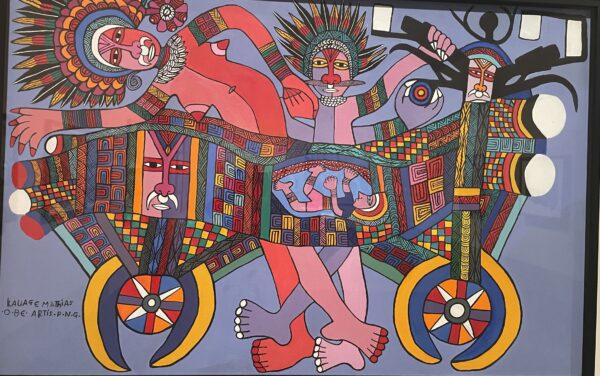
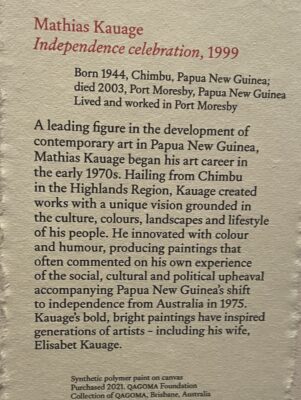
Matthew Kauge is an example of an artist who is innovative in his use of color and style, He is “a leading figure in the develoopment of contemporary art in New Guinea”! His stunning painting gives us the joy of independence.
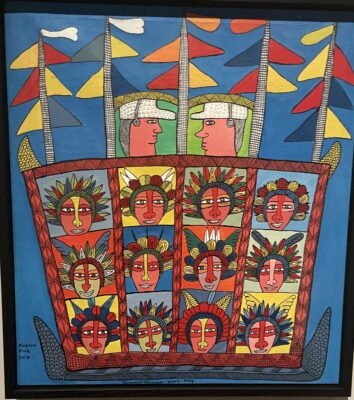
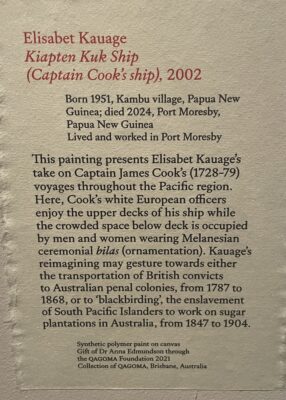
Captain Cook By Elizabeth Kauge gives us a straightforward frontal representation of the Captain Cook sailors on the top and the slaves on the bottom of the ship. The enslaved people who are not dark may represent the slaves on their way to Australia from England. They are wearing Melanesian ceremonial headresses. The artist is honoring the slaves.
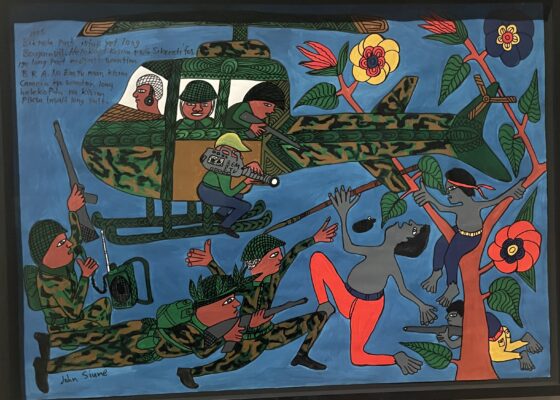
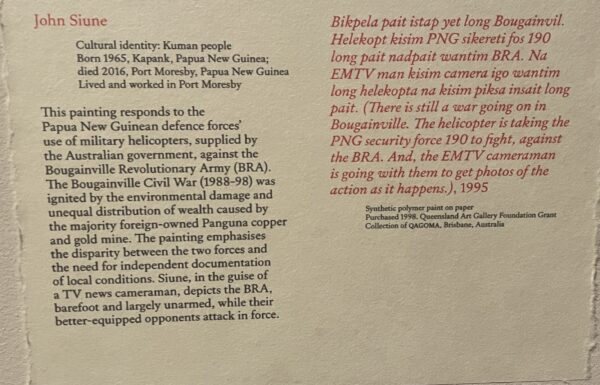
John Siune looks at the Revolutionary Civil War caused by enrionmenatl damage in Papua New Guinea by the occupying force. extracting copper. The vivid painting depicts soldiers shooting and poorly armed PapuanNew Guineans .
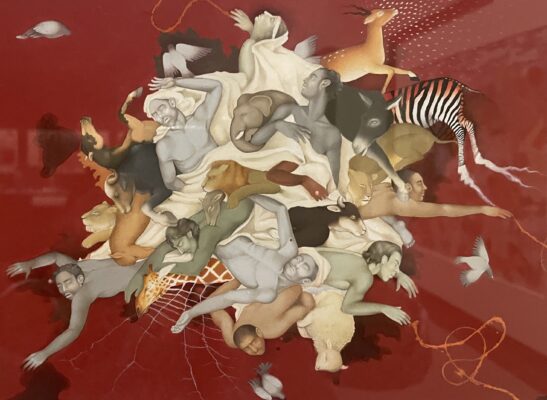
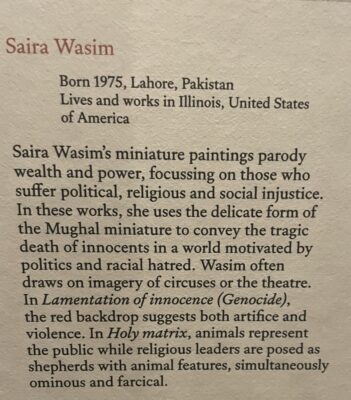
this terrifying image of genocide ( Lamentation of the Innocents) uses Mughal forms to present a world of hate and death for both humans and animals.
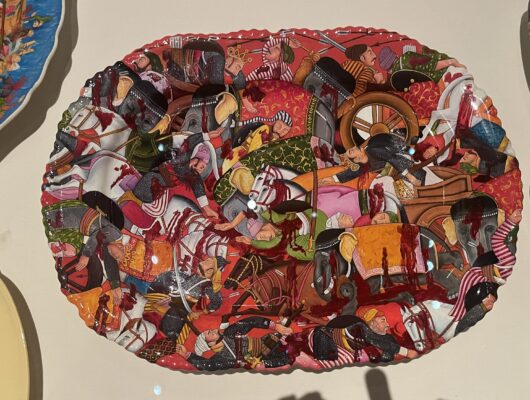
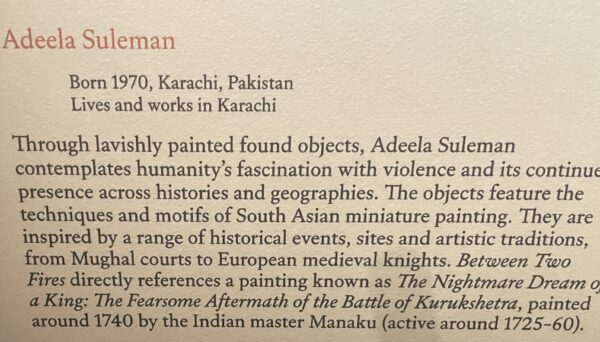
Again a reference to war annd inhumanity through Mughal miniatures
This artist Adeela Suleman refers to a specific painting and medieval event as a metaphor of contemmporary violence.
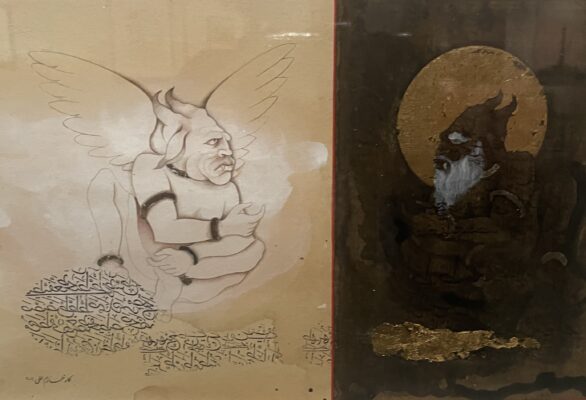
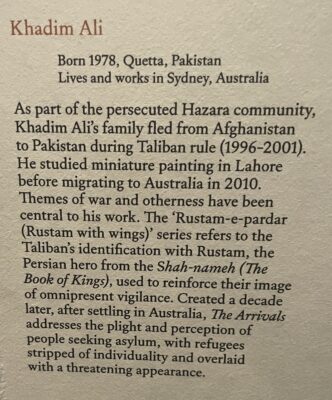
The hero with wings, Rustam, here as seen from the perspective of an Hazari who had to flee as a persecuted minority in Afghanistan. He is suggesting that the Taliban took on t
his identiy of the Hero of the Book of Kings Shahnameh) Rustam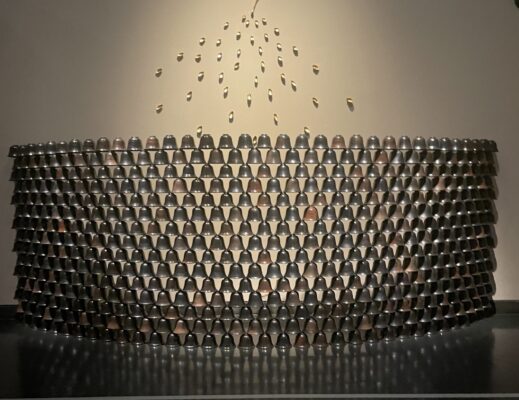
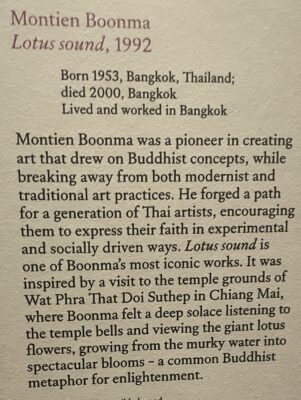
Boonma is actually familiar to me from contemporaray art shows in the West. He is Thai and this piece evokes temple bells and lotus growing into enlightement. It has a spare aesthetic that fits with western artk although he is steeped in Buddhism.
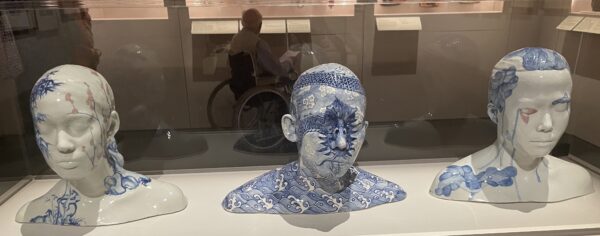
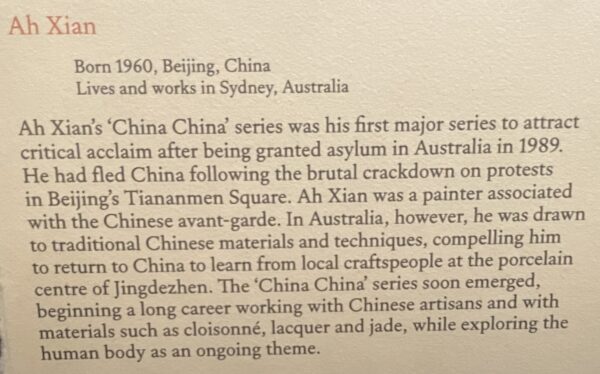
Ah Xian moved to Australia after Tiananmen Square but then went beck to China to learn traditionsl porcelain techniques, These three heads are compelling and original each one expressin a distinct emotion,
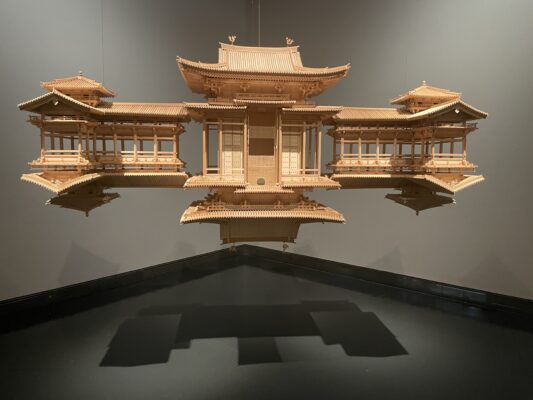
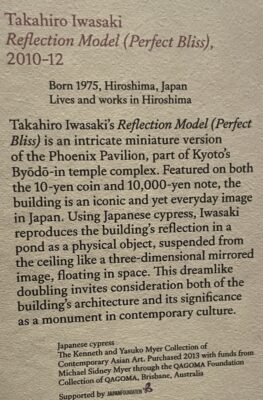
This work by Iwasaki Reflection Model Perfect Bliss is an iconic wooden temple with its reflection. in the Byodo- in temple complex in Kyoto, It is called the Phoenix pavillion perhaps because it looks like it could take off.
This is not all the works in the exhibition, there was other media and paintings . Since the museum did not send me a checklist I am relying on my own pictures. I included the extended captions because they are eloquemtly detailed.
As you can see the artists draw on many traditions to create strikingly original expressions. Some might say it has a folk look in some of the works. I find all of them deeply compelling and worth more than a cursory look. They are complex and layered between myth and the contemporary world.
This entry was posted on June 24, 2026 and is filed under Afghan War, Art and Politics Now, Art in War, Culture and Human rights, Uncategorized.